Clenbuterol: Clinical Overview, Pharmacology & Research Guide
A comprehensive pharmacological topic hub summarizing clenbuterol hydrochloride, its respiratory indications, mechanism of systemic stimulation, documented toxicity profiles, and regulatory status worldwide.
Clenbuterol is a potent sympathomimetic amine belonging to the substituted phenylaminoethanol chemical class. It functions pharmacologically as a long-acting beta-2 adrenergic agonist. Although licensed in select international jurisdictions as a human prescription bronchodilator and globally for equine respiratory disorders, it is prohibited for human use in the United States and listed as a prohibited substance under Section S1.2 of the WADA Prohibited List.
- Originally synthesized as a selective beta-2 sympathomimetic bronchodilator for reversible airway obstruction.
- Possesses a long terminal half-life of 36 to 39 hours, creating sustained physiological adrenergic stimulation.
- Not approved for human medicinal consumption in the United States by the Food and Drug Administration (FDA).
- Approved in veterinary medicine strictly for horses (under the trade name Ventipulmin) for treatment of bronchospasm.
- Associated with severe clinical toxicity: myocardial infarction, hypokalemia, cardiac ventricular dysrhythmias, and tremor.
Pharmacological Classification & Chemical Identity
Clenbuterol hydrochloride (chemical formula: C12H18Cl2N2O, molecular weight: 277.19 g/mol) is a synthetic derivative of epinephrine with structural similarities to salbutamol (albuterol) and terbutaline. However, unlike shorter-acting beta-2 agonists that feature a short elimination half-life (typically 4 to 6 hours), clenbuterol is characterized by rapid oral absorption and an extensive terminal half-life of 36 to 39 hours in human subjects.
Because of this extended half-life, systemic exposure persists for several days following a single dose, causing prolonged adrenergic receptor stimulation across cardiovascular, pulmonary, and skeletal muscle tissues.
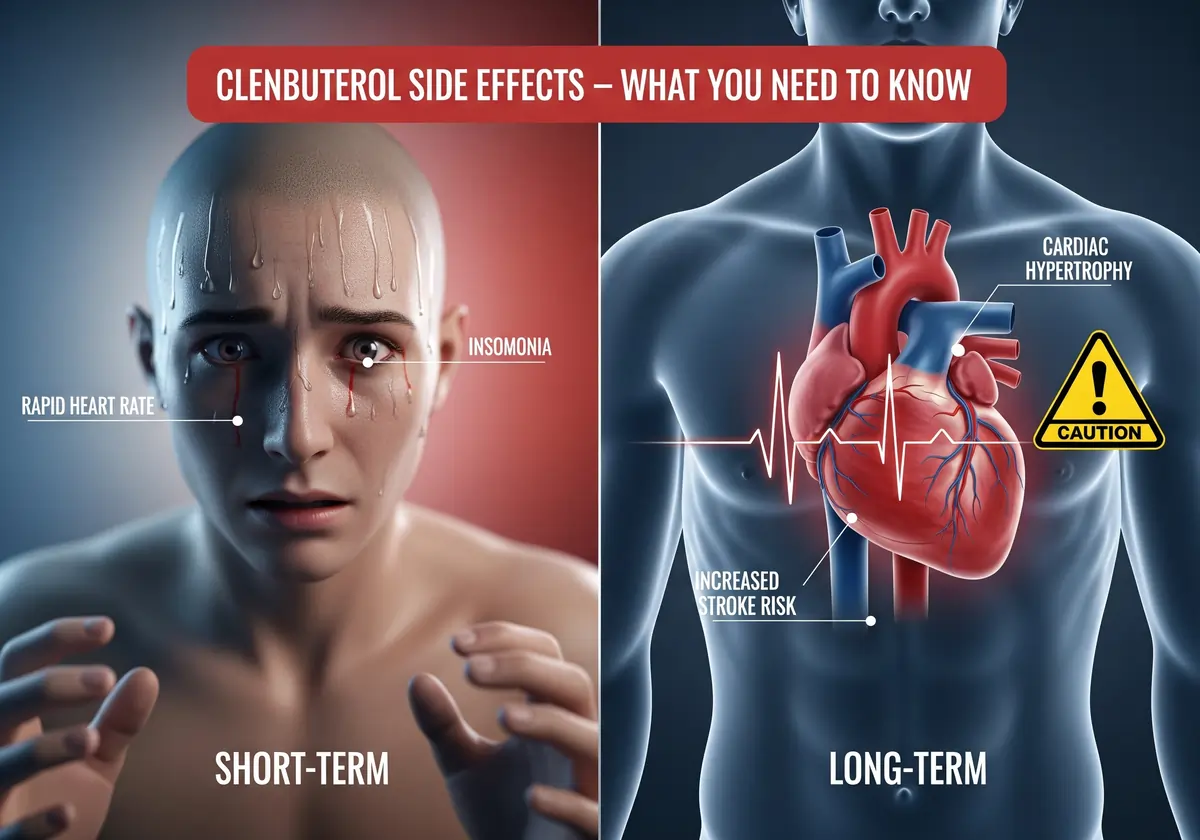
Systemic toxicity chart illustrating the physiological impact of sustained beta-2 adrenergic stimulation across organ systems.
Approved Medical and Veterinary Indications
Globally, the therapeutic scope of clenbuterol is strictly limited by regulatory authorities:
- Human Medicine (Non-U.S.): In certain European and Latin American nations, clenbuterol is prescribed as a prescription oral bronchodilator for severe chronic obstructive pulmonary disease (COPD) and asthma at microgram doses (typically 20 to 40 μg daily). It is not approved by the U.S. FDA for human administration in any formulation.
- Veterinary Medicine: In the United States, Canada, and the European Union, clenbuterol syrup is approved exclusively for horses not intended for human consumption (e.g., Ventipulmin) for the management of airway obstruction and recurrent airway obstruction (RAO).
- Food-Producing Livestock Prohibition: The use of clenbuterol in cattle, poultry, and swine is globally banned due to severe public health risks from drug residue accumulation in meat, which has caused mass human food-poisoning outbreaks characterized by acute tachycardia, tremor, and hypokalemia.
Non-Medical Misuse in Athletics and Bodybuilding
Despite lack of human approval for body composition alteration, clenbuterol has historically been diverted for illicit use in bodybuilding and athletic contexts. The primary drivers for illicit consumption include:
- Thermogenic Metabolic Elevation: Activation of β2 receptors stimulates lipolysis in adipose tissue and increases basal metabolic expenditure.
- Repartitioning / Anti-Catabolic Hypotheses: Early rodent models demonstrated skeletal muscle hypertrophy at supraphysiological doses. However, human clinical studies fail to demonstrate significant anabolic hypertrophy without profound cardiotoxic side effects.
For an in-depth scientific breakdown of how clenbuterol interacts with cellular receptors, consult our dedicated guide: How Does Clenbuterol Work?.
Clinical Risks and Adverse Toxicity Profile
Clinical poison center data demonstrate that illicit human doses frequently exceed therapeutic microgram thresholds, resulting in acute sympathomimetic toxidromes. Common clinical manifestations include:
| Organ System | Documented Manifestations | Severity / Clinical Concern |
|---|---|---|
| Cardiovascular | Severe sinus tachycardia (often > 130 bpm), palpitations, hypertension, chest pain, ST-segment elevation, myocardial ischemia | High — potential for acute myocardial infarction |
| Metabolic | Marked hypokalemia (intracellular potassium shift), hyperglycemia, hypophosphatemia, lactic acidosis | High — cardiac arrhythmia trigger |
| Neurological | Involuntary skeletal muscle tremors, agitation, nervousness, severe headache, insomnia | Moderate to High |
| Gastrointestinal | Nausea, recurrent vomiting, diaphoresis | Moderate |
Legal Status and Anti-Doping Regulations
Clenbuterol is classified under the World Anti-Doping Agency (WADA) Prohibited List under Class S1.2 (Other Anabolic Agents) and beta-2 agonists. It is banned at all times, both in-competition and out-of-competition. Under the Anti-Doping Administration and Management System, clenbuterol is a non-threshold substance, meaning any detected concentration constitutes an Adverse Analytical Finding (AAF), carrying mandatory multi-year athletic suspensions.
Non-Pharmaceutical Alternatives
Because clenbuterol carries grave health hazards and legal sanctions, individuals researching metabolic enhancement frequently explore non-prescription dietary supplements. Regulated commercial supplements contain botanicals and vitamins intended to support normal metabolic rate without pharmaceutical beta-2 receptor stimulation.
To review publisher-supplied profiles of commercial options, visit the Commercial Alternatives Hub.
Scientific & Medical References
- Spiller HA, James KJ, Scholzen S, Borys DJ (2013). A investigation of clenbuterol exposures reported to US poison centers. Clinical Toxicology (Phila). [PubMed / Source]
- Brett J, Dawson AH, Brown JA (2014). Clenbuterol toxicity: a NSW poisons information centre experience. Medical Journal of Australia. [PubMed / Source]
- World Anti-Doping Agency (2024). The World Anti-Doping Code International Standard Prohibited List. WADA Technical Documents. [PubMed / Source]
- U.S. Food and Drug Administration (2019). FDA In Brief: FDA warns against the use of unapproved clenbuterol products. FDA Safety Communications. [PubMed / Source]